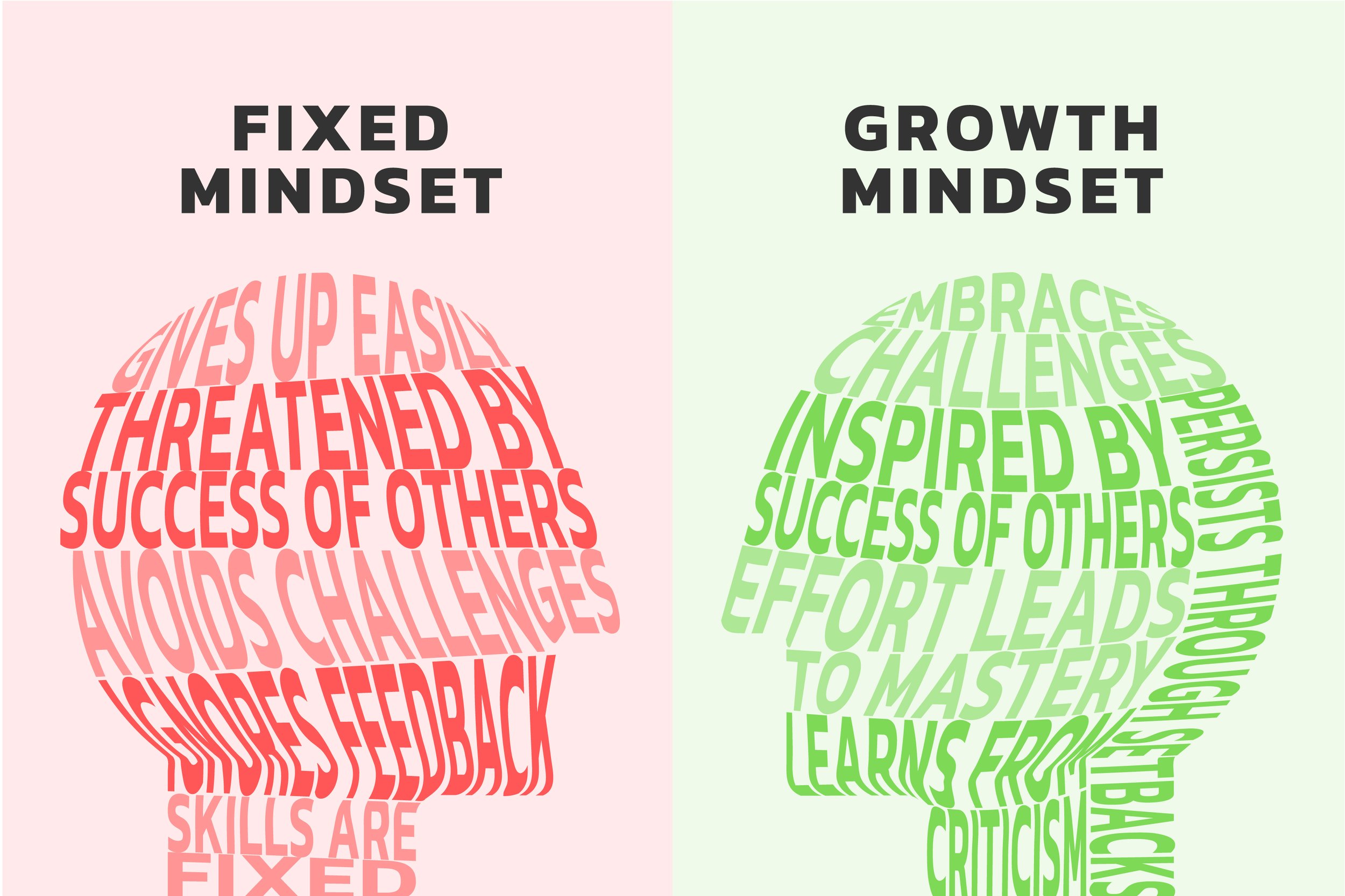
Ever wonder why some people and organizations adapt well to change while others are strongly resistant? The answer may be firmly rooted in their mindset.
Stanford University psychologist Carol Dweck has spent decades studying people’s approach to life and learning. Her research, outlined in Mindset: The New Psychology of Success, concludes that early in life individuals develop a growth or fixed mindset – and this one factor influences their capacity to succeed and their ability to rebound from failure.
People with a growth mindset believe that their innate level of intelligence, character traits and capabilities are just starting points. They focus on cultivating their capabilities through effort and collaboration with others in their organization. According to Dweck, their growth mindset “creates a passion for learning…for stretching themselves and sticking to the project at hand, even (or especially) when things are not going well.” Lawyers with a growth mindset embrace change and tend to be quite resilient.
Those with a fixed mindset believe that they were born with a fixed amount of intelligence and talent that cannot be expanded or enhanced. They feel an urgency to benchmark their capabilities and prove they are more gifted than others. According to Dweck, this often becomes a “consuming goal to prove themselves – in the classroom, in their careers and in their relationships. Every situation calls for a confirmation of their intelligence, personality or character.” These are your classmates and colleagues who obsessed over their undergraduate GPA, LSAT or GMAT score, and principally measure their success by titles, salaries and educational achievements. Fixed mindset lawyers are resistant to change, and their fear of failure makes them less resilient.
Organizations, including law firms and legal departments, have mindsets, too. According to Harvard Business School’s David Garvin, the three organizational building blocks of a growth and learning mindset are:
A supportive learning environment, featuring appreciation for diverse perspectives, openness to new ideas, time for reflection, and psychological safety. (Lawyers and staff are comfortable asking questions and expressing their views.)
Concrete learning processes and practices, which include knowledge sharing; experimentation to test new ideas; intelligence gathering; disciplined analysis to identify and solve problems; and education and training to develop employees. (Lawyers and staff understand what is expected of them and how to contribute, solve problems and achieve goals.
Leaders who embrace learning, actively question and listen to lawyers and staff at all levels, prompt dialogue and debate, and are willing to entertain alternative points of view.
According to Garvin, these are the warning signs that your organization has a fixed mindset:
Limited talent pool: Opportunities are rotated among a limited group of “star performers” denying others access to experience that could stretch their capabilities.
Burnout: “Star performers” feel overwhelming pressure and can exhibit aggressive/defensive behavior to maintain their status. They burn themselves out and/or cause high turnover in their offices, practice groups and/or teams.
One and done: The organization has a low tolerance for failure and takes punitive action against employees when mistakes are made.
Project churn: There is a high level of project initiation and abandonment. (Employees exhibit apathy and do not believe that organizational leaders mean what they say.)
Performance evaluation inflation: The performance management system focuses on achievement-based, as opposed to learning and growth, goals. (Reinforcing the “superstar” phenomenon as employees compete to take credit for accomplishments and ideas, and undermine collaboration efforts.)
Addressing the diversity of challenges and opportunities facing the legal industry will require cultivation of a growth mindset by individuals and organizations. The good news is mindsets are malleable. Each of us can do our part by:
Modeling growth-mindset behavior (willingly share credit, don’t place blame, be inclusive and open to new ideas, and share opportunities, knowledge and information);
Recognizing fixed mindset behavior and neutralizing its impact on projects, practice teams, and individual lawyers and staff; and
Coaching colleagues to help them develop growth mindset behavior.